What is
What is inflation?
The easy explanation: if you buy 1 litre of milk for £1 today and in a year the price goes up to £1.04, the annual rate of inflation is 4%.
The easy explanation: if you buy 1 litre of milk for £1 today and in a year the price goes up to £1.04, the annual rate of inflation is 4%.
Another way of thinking about inflation: if the milk costs £1 in a year’s time but the size of the container shrinks down to 0.96L. Just like the size of some chocolate bars!
Even if inflation slows down, the price of milk will still go up each year. The rate of increase is due to inflation.
What causes inflation?
Increasing costs – as we need to import oil and gas the cost of transporting materials into the UK increases, affecting manufacturers.
Competition – when demand increases, like tickets to see your favourite music band, the cost goes up.
What is the impact of inflation?
If your wages are increasing by 3% per annum, but food and petrol prices are increasing at 4% per annum, then your wages are not keeping up with inflation and your household finances are being squeezed.
A less obvious effect is the impact on savings. If you keep spare cash in your current bank account getting no interest then you are losing 4% per annum.
How to protect savings from inflation
Cash savings offer little capital risk but also little return. But they do have inflation risk when the interest rate doesn’t keep up with the inflation rate.
This is where investing into fixed income can help. You could lend your cash to very large companies e.g., supermarkets and get a higher return (yield). Please see how to invest in fixed income.
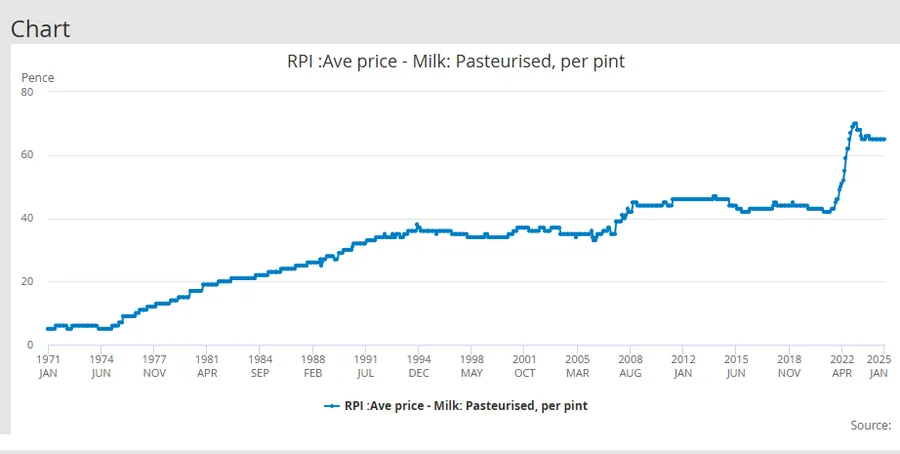
The following chart from the ONS shows how inflation has affected the price of milk since 1971:
This is why money left sitting still has a cost, even when the balance never moves. A bond is one of the ways people try to stay ahead of it: you lend for a fixed period and are paid interest for doing so. A bond fund spreads that lending across hundreds of borrowers, and an actively managed one will tactically move between them. It is not a guarantee of beating inflation, and bonds can fall in value, but it is a different risk from the certainty of standing still.
Information, not advice. This guide is general information to help you understand your options. It is not personal advice and not a recommendation to buy, sell or hold any investment. If you are unsure what is right for your circumstances, consider taking regulated financial advice. The value of investments and any income received from them can fall as well as rise, and investors may receive back less than they originally invested. Past performance is not a guide to future returns.